
Best Furniture Material for Humid Weather in Goa | Expert Guide
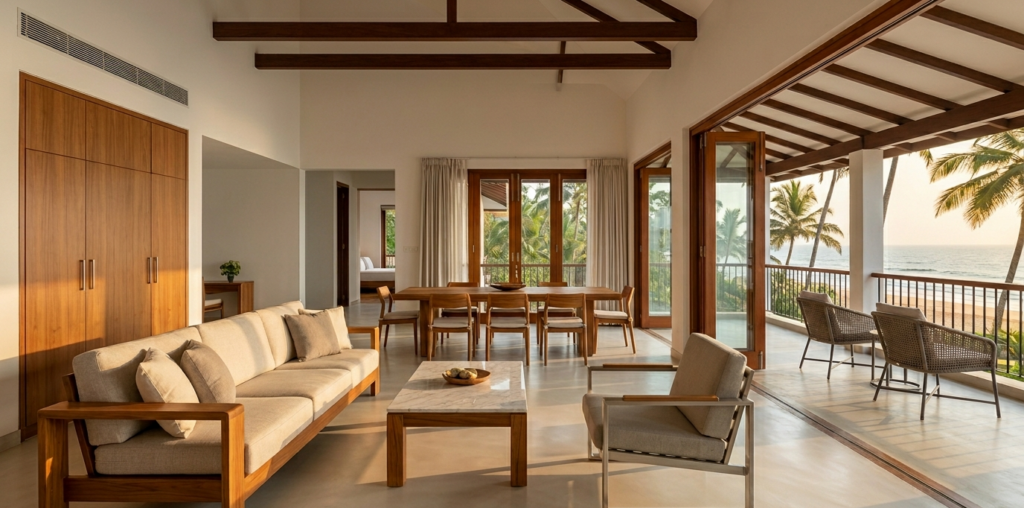
Buying furniture in Goa is not the same as buying furniture in a dry inland city. The coastal climate brings moisture, salt air, monsoon dampness, and strong sunlight into everyday home life. A sofa, bed, dining table, wardrobe, or outdoor lounger may look beautiful in a showroom, but the real test begins once it enters a humid Goan home.
That is why choosing the best furniture material for humid weather is one of the most important decisions for homeowners, villa owners, interior designers, and hospitality buyers in Goa. The right materials can last for years with minimal issues. The wrong ones may swell, crack, rust, fade, or develop mildew within a few seasons.
This expert guide explains how humidity affects different materials, which coastal furniture materials work best, and where Goa buyers should invest more for long-term performance.
How humidity affects wood, fabric, metal, and finishes
Humidity affects furniture slowly but consistently. In coastal areas like Goa, moisture in the air gets absorbed by porous materials, reacts with metals, and weakens poor-quality finishes. This is why humid climate furniture must be selected with more care.
Wood is one of the most loved furniture materials, but it is also sensitive to moisture. In humid weather, low-quality wood can absorb water from the air, causing swelling, warping, cracking, or fungal growth. Poorly seasoned wood is especially risky because it may change shape after installation. For wardrobes, beds, dining tables, and cabinets, this can lead to misaligned shutters, stuck drawers, and uneven surfaces.
Fabric also reacts strongly to humidity. Thick, untreated upholstery can trap moisture and develop a musty smell. In homes near beaches or areas with limited ventilation, fabric sofas and headboards may attract mildew if the material is not breathable or easy to maintain. This does not mean fabric should be avoided, but it must be chosen wisely.
Metal furniture faces a different problem: corrosion. Salt in coastal air speeds up rusting, especially on iron or poorly coated metal. Once rust begins, it can stain flooring, weaken joints, and spoil the furniture’s appearance. Powder-coated, stainless steel, or treated metal options usually perform better in coastal settings.
Finishes are equally important. Even high-quality material can fail if the finish is weak. Laminates, veneers, polishes, paints, lacquers, and protective coatings act as the furniture’s first defense against moisture. A good finish prevents water absorption, reduces staining, and makes cleaning easier. In Goa, the finish should not be treated as a cosmetic detail; it is a durability feature.
Which materials perform best in premium Goa homes
For premium homes in Goa, buyers should look for a balance of beauty, strength, and climate performance. The best wood for Goa homes is usually well-seasoned hardwood or high-quality engineered wood with proper surface protection.
Teak is one of the strongest choices for coastal homes. It has natural oils that help resist moisture, pests, and decay. This makes it excellent for beds, dining tables, consoles, outdoor seating, and statement pieces. Teak is more expensive, but its long-term performance often justifies the investment.
Solid hardwoods, when properly seasoned and finished, can also work well. However, buyers should avoid untreated or poorly processed wood. In Goa’s climate, craftsmanship matters as much as the wood species. A premium wooden piece should have stable joinery, smooth finishing, and protective coating on all exposed and hidden surfaces.
Engineered wood can be a practical choice for wardrobes, modular storage, TV units, and kitchen-style cabinets when quality is high. Marine plywood, high-grade plywood, and moisture-resistant boards perform better than low-cost particle board. For homes in humid areas, marine-grade or boiling-water-resistant plywood is generally a safer option for built-in furniture.
For tabletops and accent surfaces, stone, marble, quartz, ceramic, and high-pressure laminates can perform well when used correctly. These materials resist moisture better than many porous woods, but they still need strong base support and proper sealing.
For upholstery, performance fabrics, treated fabrics, leatherette, and selected genuine leather options can work depending on the room. Breathable, stain-resistant, and easy-to-clean fabrics are better suited for Goa homes than heavy fabrics that trap moisture. For sofas, the inner frame and foam quality are just as important as the visible fabric.
For metal accents, stainless steel, aluminum, and powder-coated metal are stronger choices than untreated iron. These work well for legs, frames, handles, dining chairs, outdoor pieces, and contemporary furniture details.
Premium furniture materials in Goa should always be judged by three questions: Will it resist moisture? Is it easy to maintain? Has it been finished properly for coastal use?
Best options for living rooms, bedrooms, dining rooms, and covered outdoor spaces
Living rooms need furniture that handles daily use, guests, ventilation changes, and occasional moisture exposure. For sofas, choose hardwood or high-quality engineered frames with breathable upholstery and durable foam. Performance fabric is a good option for family homes, while leather or leatherette can work in air-conditioned spaces with regular care. Coffee tables in teak, stone-top, glass-top, or laminate-top designs are practical for humid conditions.
Bedrooms require special attention because wardrobes, beds, and side tables often stay in closed spaces where air circulation may be limited. For beds, teak or well-finished hardwood offers excellent durability. For wardrobes, marine plywood or high-grade moisture-resistant plywood with laminate finish is a smart choice. Avoid very low-cost particle board wardrobes in damp rooms, as they may swell over time.
Dining rooms need strong surfaces because food, water, cleaning, and heat are common. A teak dining table, marble-top dining table, ceramic-top table, or well-laminated engineered table can perform well. Dining chairs should have stable wooden or coated metal frames. Upholstered dining chairs should use easy-clean fabric, especially in homes with children, pets, or frequent entertaining.
Covered outdoor spaces such as balconies, patios, verandas, and poolside seating areas need the most climate-resistant materials. Teak, treated outdoor wood, aluminum, synthetic wicker, powder-coated metal, and outdoor-grade fabrics are better choices here. Even if the space is covered, coastal moisture and wind-driven rain can still affect furniture. Outdoor cushions should ideally be removable, washable, and quick-drying.
Where buyers should invest more for long-term performance
In Goa, it is wise to invest more in furniture pieces that carry weight, face daily use, or are difficult to replace. Beds, sofas, dining tables, wardrobes, and outdoor furniture should receive a higher budget because poor material selection in these categories leads to expensive repairs or replacements.
Invest more in sofa frames and foam rather than only focusing on the outer fabric. A sofa may be reupholstered later, but a weak frame will reduce its life. For beds, spend more on the structure, joints, and wood quality. For wardrobes, invest in moisture-resistant boards, good hinges, proper edge banding, and premium laminates. For dining tables, choose a surface that resists stains and moisture.
Buyers should also invest in finishes. A slightly higher upfront cost for better polish, laminate, sealing, or powder coating can prevent long-term damage. In humid coastal weather, hidden areas matter too. The underside of tables, backs of cabinets, internal shelves, and drawer edges should be protected properly.
Another important investment is professional guidance. Many buyers choose furniture based only on appearance, but premium coastal homes require climate-aware recommendations. The right furniture expert will help match material, finish, room use, and maintenance expectations.
Why choose Brocaade for premium furniture materials in Goa
Brocaade Home Decor in Margao focuses on furniture that suits Goa’s coastal lifestyle. The brand offers sofas, beds, wardrobes, dining sets, TV units, office furniture, and décor accents selected for comfort, design, and performance in local conditions. Brocaade’s own content highlights its focus on pieces that “look beautiful, feel comfortable, and perform well in Goa’s coastal climate”.
For buyers looking for premium furniture materials in Goa, Brocaade is especially useful because the team understands the practical challenges of humid homes, beachside villas, apartments, and commercial spaces. Their collections include modern furniture, modular furniture, sofas, beds, wardrobes, dining tables, and outdoor-suitable options designed around Goan living.
Whether you are furnishing a new villa, upgrading a family home, designing a rental property, or selecting durable furniture for a hospitality space, Brocaade can help you choose materials that balance style with long-term performance. Instead of selecting furniture only by colour or trend, you can make informed choices based on frame quality, finish, fabric, wood type, maintenance, and room usage. Material choice is only one part of a project budget, and it helps to see what affects interior design cost in Goa across scope, finishes and site conditions.
Visit Brocaade in Margao to explore furniture that fits Goa’s weather, interiors, and lifestyle.
FAQs
1. What is the best furniture material for humid weather?
Teak, well-seasoned hardwood, marine plywood, moisture-resistant engineered wood, aluminum, stainless steel, powder-coated metal, and outdoor-grade fabrics are among the best choices for humid weather.
2. What is the best wood for Goa homes?
Teak is one of the best wood options for Goa homes because it naturally resists moisture and decay. High-quality seasoned hardwood and marine plywood are also good choices when properly finished.
3. Is engineered wood suitable for humid climate furniture?
Yes, but only if it is high quality. Marine plywood, BWR plywood, and moisture-resistant boards perform better than cheap particle board in humid coastal homes.
4. Which sofa fabric is best for coastal homes in Goa?
Performance fabric, breathable upholstery, easy-clean fabric, and selected leatherette options work well. Avoid heavy fabrics that trap moisture, especially in poorly ventilated rooms.
5. How can I make furniture last longer in Goa’s humidity?
Choose climate-appropriate materials, keep rooms ventilated, avoid placing furniture directly against damp walls, clean surfaces regularly, use dehumidifiers when needed, and invest in good finishes and protective coatings.