
Upgrading Furniture in an Occupied Goa Home: A Phased Furniture Setup Guide
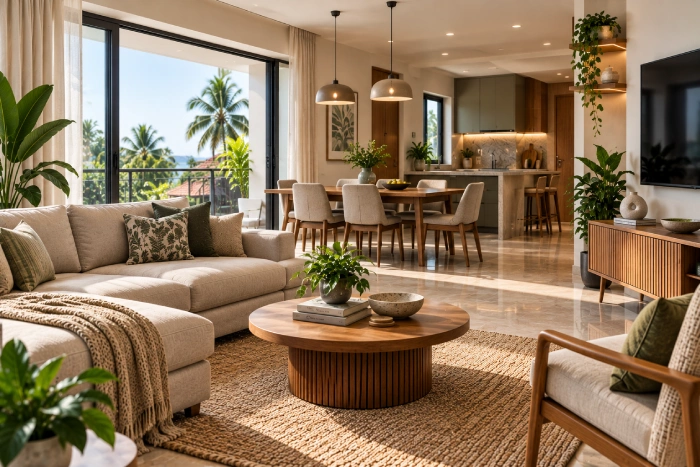
Upgrading furniture does not always require emptying the house or beginning a full renovation. Many homeowners in Goa reach a point where the sofa feels dated, the mattress no longer suits their preferences, the dining setup feels impractical, or storage no longer matches the way the family lives.
When the home is already occupied, replacing everything at once can create unnecessary disruption. A more practical approach is to upgrade the furniture in phases, starting with the rooms and products that have the greatest effect on daily comfort and function.
At Brocaade in Goa, homeowners can explore premium sofas, beds, mattresses, dining furniture, storage solutions, and custom furniture while planning upgrades around an existing home. If you want to refresh your furniture without treating the entire property as a renovation project, visit the showroom or book a consultation to plan which rooms and products should be addressed first.
The direct answer: replace furniture according to daily impact, not room appearance
Start by identifying which furniture creates the biggest problem in everyday life.
That may be:
- A sofa that no longer provides the comfort or seating the family needs
- A mattress that both users no longer prefer
- A bed that does not suit the current room layout
- A dining table that occupies too much space
- Storage that no longer supports household requirements
- Furniture that makes movement difficult
- Several unrelated pieces that make a room feel visually inconsistent
Once these priorities are clear, divide the upgrade into manageable phases rather than buying replacements across the entire home at once.
Phase 1: audit what should stay and what should change
Before visiting a showroom, walk through the home and separate the existing furniture into three groups.
| Furniture status | What it means |
| Keep | Still comfortable, functional, and appropriate for the room |
| Replace | No longer suits daily use, condition, proportion, or comfort |
| Reconsider | May work in another room or after surrounding furniture changes |
This prevents good furniture from being replaced simply because other pieces are being upgraded.
A side table from the living room may work in a guest bedroom. A chair may move to a study. A storage unit may still be useful even if the sofa around it changes.
The objective is to improve the home, not automatically replace everything.
Start with furniture used every day
Daily-use furniture usually deserves priority.
For many households, this means the sofa, bed, and mattress.
A new sofa can change both comfort and the visual balance of the living room. A new mattress can change the way the bedroom feels to its users. A bed that fits the room better can improve movement and storage planning.
At Brocaade, homeowners can compare these products in person and assess whether replacing one key item is enough to improve the room before adding other pieces.
Upgrade the living room without rebuilding it
An occupied living room already has established walking paths, electrical points, curtains, lighting, and often a TV setup. A furniture upgrade should work around these conditions.
Before replacing the sofa:
- Measure the existing sofa
- Note what works about its size
- Identify where circulation feels restricted
- Check the TV distance
- Measure side-table and centre-table clearance
- Decide whether all existing seating needs replacement
Sometimes replacing only the main sofa is enough. In other cases, the centre table, occasional chairs, or TV furniture may also need to change so the room feels balanced. Homeowners can compare premium sofas in Goa based on seating requirements, available space, comfort, and how well a new sofa will coordinate with furniture that is being retained.
If the existing TV area is also part of the problem, avoid automatically rebuilding the entire wall. First determine whether better storage, cable management, display space, or a more proportionate unit would solve it. Brocaade’s existing guide to custom TV wall and display storage in Goa explains how TV placement, storage, wiring, finishes, lighting, and everyday usability can be considered before ordering a new unit.
Avoid turning a furniture replacement into an unnecessary structural redesign unless there is a genuine functional problem.
Avoid turning a furniture replacement into an unnecessary structural redesign unless there is a genuine functional problem.
Plan bedroom upgrades around the bed and mattress
Bedrooms can often be upgraded efficiently because the bed and mattress have such a strong influence on the room.
Start by deciding whether:
- The existing bed should remain
- Only the mattress needs changing
- Bed size needs reconsideration
- Bedside units still work with the new setup
- Storage requirements have changed
If a new mattress is being added to an existing bed, check mattress dimensions and final height.
If both the bed and mattress are being replaced, plan them together. A thicker mattress can change bedside-unit height and headboard proportion, while a larger bed can reduce wardrobe clearance.
Brocaade can help buyers compare bed and mattress combinations before changing the rest of the bedroom.
Upgrade one room before moving to the next
Completing one furniture zone at a time helps homeowners see the result before making decisions elsewhere.
A practical sequence could be:
- Main living room
- Master bedroom
- Dining area
- Secondary bedrooms
- Study or work area
- Additional storage
- Custom pieces
The exact order should reflect the household’s needs.
A family that spends most of its time in the living room may begin there. Someone dealing with an unsuitable mattress may prioritise the bedroom first.
The objective is to solve actual problems rather than follow a fixed furnishing formula.
Coordinate new furniture with pieces you are keeping
An occupied home rarely starts with a blank visual palette. Flooring, curtains, wardrobes, tables, lighting, and other furniture may remain.
New furniture should therefore coordinate with retained pieces rather than forcing homeowners to replace everything simply to create an exact match.
If a wooden dining table is staying, the new chairs do not necessarily need the same finish. If the existing TV unit remains, the new sofa can introduce upholstery that complements it without repeating the same colour.
A controlled mix can feel more natural than trying to make old and new pieces look identical.
Be careful when adding more storage
A furniture upgrade is often used as an opportunity to solve storage problems, but adding cabinets everywhere can make an occupied home feel smaller.
Before ordering storage, identify what the existing furniture fails to accommodate.
Ask:
- What items need a permanent place?
- Which storage is difficult to access?
- Is the problem capacity or organisation?
- Could a current unit be repurposed?
- Does the room actually have space for another cabinet?
Custom furniture can be useful when an existing layout has an awkward niche, empty wall, or specific storage requirement. It should solve a defined problem rather than simply fill available space.
Plan deliveries around an occupied home
Furniture delivery into a lived-in property needs more coordination than delivery into an empty home.
Before a new product arrives:
- Decide when the old furniture will be moved
- Clear the delivery path
- Measure doors, lifts, corridors, and stairs
- Protect nearby furniture where appropriate
- Ensure the destination room has enough working space
- Avoid ordering several large items for the same day unless the home can accommodate them
For large sofas, beds, and storage units, access should be checked before purchase.
Phased furniture upgrade checklist
Before beginning each phase, confirm:
- Which furniture is staying
- Which furniture is being replaced
- Accurate room measurements
- Existing finishes and colours
- Delivery access
- Current electrical and TV points
- Storage requirements
- Bed and mattress compatibility
- Walking clearance
- Priority for the next room
This keeps the project focused on furniture rather than allowing it to expand unnecessarily into a full renovation.
Common mistakes to avoid
The first mistake is replacing everything simply because one piece looks dated.
The second is buying new furniture without measuring the existing layout.
The third is trying to match old and new furniture exactly.
The fourth is upgrading several rooms simultaneously without deciding priorities.
The fifth is adding custom storage before understanding what the household actually needs to store.
FAQs
Which furniture should I replace first in an occupied home?
Start with furniture that has the greatest effect on daily comfort or function, such as the sofa, bed, mattress, dining furniture, or essential storage.
Can I upgrade furniture without renovating the room?
Yes. Furniture, storage, and room layout can often be improved without changing flooring, walls, electrical work, or other fixed finishes.
Should new furniture match the furniture I already own?
It should coordinate, but exact matching is not always necessary. Related materials, colours, proportions, and finishes can create a balanced result.
Is it better to replace furniture one room at a time?
For many occupied homes, phased replacement can reduce disruption and make it easier to evaluate each upgrade before moving to the next area.
Visit Brocaade for phased furniture upgrades in Goa
Upgrading an occupied home does not have to become a complete renovation. By identifying what still works, prioritising daily-use furniture, and replacing rooms in stages, homeowners can improve comfort and functionality without unnecessarily changing the entire property.
For homes, apartments, and villas in Goa, Brocaade offers sofas, beds, mattresses, dining furniture, storage solutions, custom furniture, and room-wise furniture guidance. Visit Brocaade in Goa or book a consultation to plan a phased furniture upgrade around the home you already live in.