
Custom Dining Sideboards & Crockery Units in Goa: Storage & Planning Guide
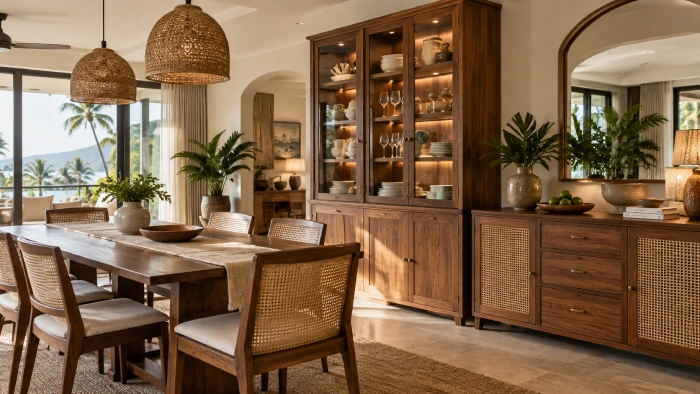
A dining room often needs more storage than the dining table itself can provide. Plates, glassware, serving bowls, table linen, cutlery, trays, bottles, and occasional-use pieces all need a practical place that is easy to reach without making the room feel crowded.
This is where a custom dining sideboard or crockery unit can help. The right piece should not only look premium. It should suit the wall available, store the right items, allow comfortable serving movement, and work with the dining table, kitchen, lighting, and circulation around the room.
At Brocaade in Goa, homeowners can explore dining furniture, storage solutions, and custom furniture planning for apartments, villas, and premium homes. If your dining area needs more organised storage, visit the showroom or book a consultation to discuss sideboard dimensions, crockery-unit layout, finishes, and how the furniture should work with your existing dining setup.
The direct answer: choose the storage type based on what you actually need to keep
A dining sideboard and a crockery unit can serve different purposes.
A sideboard is generally lower and works well when you need closed storage plus a useful surface for serving, displaying décor, or placing dishes temporarily.
A taller crockery unit can provide more vertical storage and may suit households with larger collections of glassware, tableware, serving pieces, or display items.
The better option depends on:
- What needs to be stored
- How often those items are used
- Available wall width
- Dining-table clearance
- Kitchen proximity
- Whether display storage is wanted
- Serving habits
- Room proportion
The furniture should solve a real storage problem rather than simply fill an empty wall. Homeowners considering custom furniture solutions in Goa can plan the unit around actual room dimensions, storage requirements, finishes and everyday dining habits instead of adapting a standard cabinet to the available space.
Sideboard vs crockery unit: quick comparison
| Planning factor | Dining sideboard | Taller crockery unit |
| Height | Lower profile | Uses more vertical wall space |
| Storage style | Drawers, shutters, shelves | Shelves, display areas, drawers, shutters |
| Serving surface | Usually more usable | May have a smaller work surface |
| Visual impact | Lighter and more horizontal | Stronger wall presence |
| Best for | Serveware, linen, cutlery, daily dining storage | Larger crockery collections and display |
| Room suitability | Works well in many compact and open layouts | Better where wall height and width allow |
| Main question | Do you need a serving surface? | Do you need more vertical storage? |
Start by listing what you need to store
Before deciding the design, identify the items that need a permanent place.
Typical dining-storage requirements may include:
- Dinner plates
- Bowls
- Glassware
- Serving bowls
- Trays
- Cutlery
- Table mats
- Napkins and linen
- Bottles
- Decorative or occasional-use crockery
- Small dining accessories
Items used every day should be easy to reach. Occasional-use pieces can sit in higher shelves or less accessible sections.
This exercise also helps decide whether the unit needs more drawers, shelves, shutters, or open display sections.
Plan drawers, shelves and shutters by use
Different storage formats work better for different items.
Drawers can be useful for cutlery, table linen, coasters, napkins, and smaller accessories. Shelves may suit plates, bowls, and serving pieces. Closed shutters help keep less decorative items out of sight, while glass-fronted or open sections can display selected crockery.
A custom unit does not need equal-sized compartments simply for symmetry. Internal planning should reflect what will actually be stored.
At Brocaade, homeowners can discuss custom storage based on household use so the unit remains practical rather than becoming a decorative cabinet with wasted space.
Check the wall before deciding the size
Custom furniture should be planned around actual site measurements.
Before finalising a dining sideboard or crockery unit, check:
- Available wall width
- Skirting
- Electrical points
- Switches
- Windows
- Door movement
- Nearby kitchen openings
- Dining-table position
- Chair movement
- Walking path
A wide unit may look impressive but can make the room feel tight if the dining table sits too close to it.
In compact apartments, a lower sideboard may provide enough storage without visually closing the space. In larger villas, a taller crockery unit or wider custom composition may suit the room better.
The goal is proportion, not maximum size.
Protect the serving flow around the dining table
Dining furniture should support movement between the kitchen, storage unit, and table.
Think about what happens during an actual meal.
Can someone bring food from the kitchen without squeezing past a chair? Can a serving dish be placed on the sideboard temporarily? Can crockery be taken out while another person is seated? Do drawers open without hitting dining chairs?
These practical questions are more important than how the unit looks when the room is empty.
A good layout should allow the storage unit to support serving rather than interrupt it.
Think carefully about open display
Open shelves and glass display sections can make a crockery unit feel lighter and more decorative, but they also place the stored items on constant view.
Before including large display areas, ask:
- Do you have items worth displaying?
- Are you comfortable maintaining them?
- Will the unit look cluttered when fully used?
- Would a combination of open and closed storage work better?
For many homes, a balanced combination works well: selected display areas for attractive pieces and closed storage for everyday dining items.
This keeps the room visually organised while still allowing the unit to feel personal.
Coordinate the unit with the dining furniture
A custom sideboard or crockery unit should feel connected to the dining table and chairs, but exact matching is not necessary.
The furniture can coordinate through:
- Wood tones
- Laminate or veneer direction
- Handle finishes
- Upholstery colours
- Metal accents
- Surface textures
- Overall proportion
For example, a dining table with a strong wooden finish may work with a more neutral sideboard. A simple table may allow the storage unit to introduce a richer finish or subtle display detail.
Homeowners comparing dining tables in Goa should consider the table and storage unit together so their dimensions, finishes and visual proportions complement each other without making the dining area feel overcrowded.
Brocaade can help homeowners compare dining furniture and custom storage finishes together rather than selecting each piece independently.
Consider lighting and electrical points early
If the crockery unit includes display sections, some homeowners may want integrated or nearby lighting. Any lighting requirement should be discussed before the unit is finalised so wiring and switches are not treated as an afterthought.
Likewise, if the sideboard surface may be used for small appliances, lamps, or other powered items, nearby electrical points should be considered during planning.
Do not design the furniture first and then discover that it blocks a socket or requires awkward wiring.
Custom dining-storage checklist
| Planning area | What to check |
| Storage list | Crockery, glassware, linen, cutlery, serveware |
| Unit type | Sideboard, tall crockery unit, or combined design |
| Wall size | Width, height, skirting, switches |
| Internal layout | Drawers, shelves, shutters, display |
| Dining clearance | Chair movement and walking space |
| Serving flow | Kitchen-to-table movement |
| Finishes | Coordination with table and surrounding furniture |
| Electrical | Lighting or powered-use requirements |
| Maintenance | Cleaning access and display upkeep |
Common mistakes to avoid
The first mistake is designing the unit before deciding what will be stored.
The second is making the unit too large simply because the wall is available.
The third is adding excessive display shelving without considering maintenance.
The fourth is ignoring dining-chair clearance when drawers or shutters are open.
The fifth is copying a reference image without adapting the proportions to the actual room.
FAQs
Is a sideboard better than a crockery unit?
A sideboard may be better when you need lower storage and a useful serving surface. A taller crockery unit may suit households that need more vertical storage or display space.
Should a crockery unit match the dining table exactly?
Not necessarily. The pieces should coordinate through related finishes, colours, or proportions, but an exact match is not required.
What should I measure before ordering dining storage?
Measure the wall, dining-table position, chair clearance, walking paths, switches, windows, doors, and the route between the kitchen and dining area.
Is custom dining storage useful for smaller homes?
It can be useful when the unit is sized carefully and solves a specific storage need. In smaller rooms, keeping the design proportionate is especially important.
Visit Brocaade for custom dining storage in Goa
A dining sideboard or crockery unit should make serving, storage, and everyday dining easier while fitting naturally into the room.
For apartments, villas, and premium homes in Goa, Brocaade offers dining furniture, custom furniture solutions, and room-wise furniture guidance. Visit Brocaade in Goa or book a consultation to plan a custom sideboard or crockery unit around your dining space, storage needs, and serving routine.